Individual Mobility 2026–27
Culture Moves Europe
€85/day + €400–€800 travel, with green, family, visa and accessibility top-ups · Creative Europe countries
Eligibility: Residents of Creative Europe countries, 18+
Apply / details →
Free US shipping on orders of $150 or more
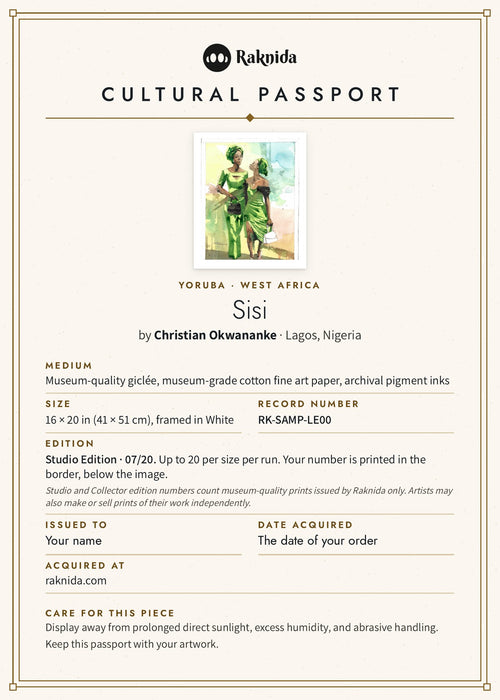
Every artwork comes with its Cultural Passport
See any artwork on a wall, at true size, before you buy
Artists
Raknida for Business
News
No stories match — try another category or clearing your search.

Culture & Market
Nigeria became independent on 1 October 1960. For many Nigerian artists, the date is less a holiday than a question: who are we, and who tells our story?

Artists
Every artist hits a block. These five steps help you rest, reset and start making again.

Provenance
Authenticity at Raknida means a named artist, a credited tradition and an honest declaration of how...

Provenance
Every Raknida artwork comes with a Cultural Passport. Here is what it records, who writes it,...
One considered email a month. No noise.
For Artists
Residencies, grants, fellowships and open calls — curated for cultural artists on Raknida and beyond. Verified deadlines, kept current.

Culture Moves Europe
€85/day + €400–€800 travel, with green, family, visa and accessibility top-ups · Creative Europe countries
Eligibility: Residents of Creative Europe countries, 18+
Apply / details →
Goethe-Institut
Up to €4,000 travel & exchange · Africa ↔ Europe
Eligibility: Artists & cultural professionals from Sub-Saharan Africa and Europe
Apply / details →
World Photography Organisation (Sony)
Photographer of the Year $25,000 + solo show; Single Image winner $5,000; Sustainability Prize $5,000; Sony equipment · Online entry · London exhibition
Eligibility: Worldwide, any device
Apply / details →
Rijksakademie
Amsterdam studio, stipend & work budget · Amsterdam, Netherlands
Eligibility: Worldwide (LDC fee waivers)
Apply / details →Always confirm details and deadlines with the listing organisation. Raknida curates these but isn't responsible for third-party terms. Listings verified 20 Nov 2026.
Get opportunities in your inbox →Culture & Market
In short
Nigeria became independent from Britain on 1 October 1960. It became a republic three years later. Every 1 October since, the green-white-green flag goes up across the country and across its diaspora.
For many Nigerian artists, the day is less a holiday than a question. Who are we, and who gets to tell our story?
Independence was celebrated on the Lagos Race Course. In 1972, Tafawa Balewa Square was built on the same ground, with white horse statues at its entrance.
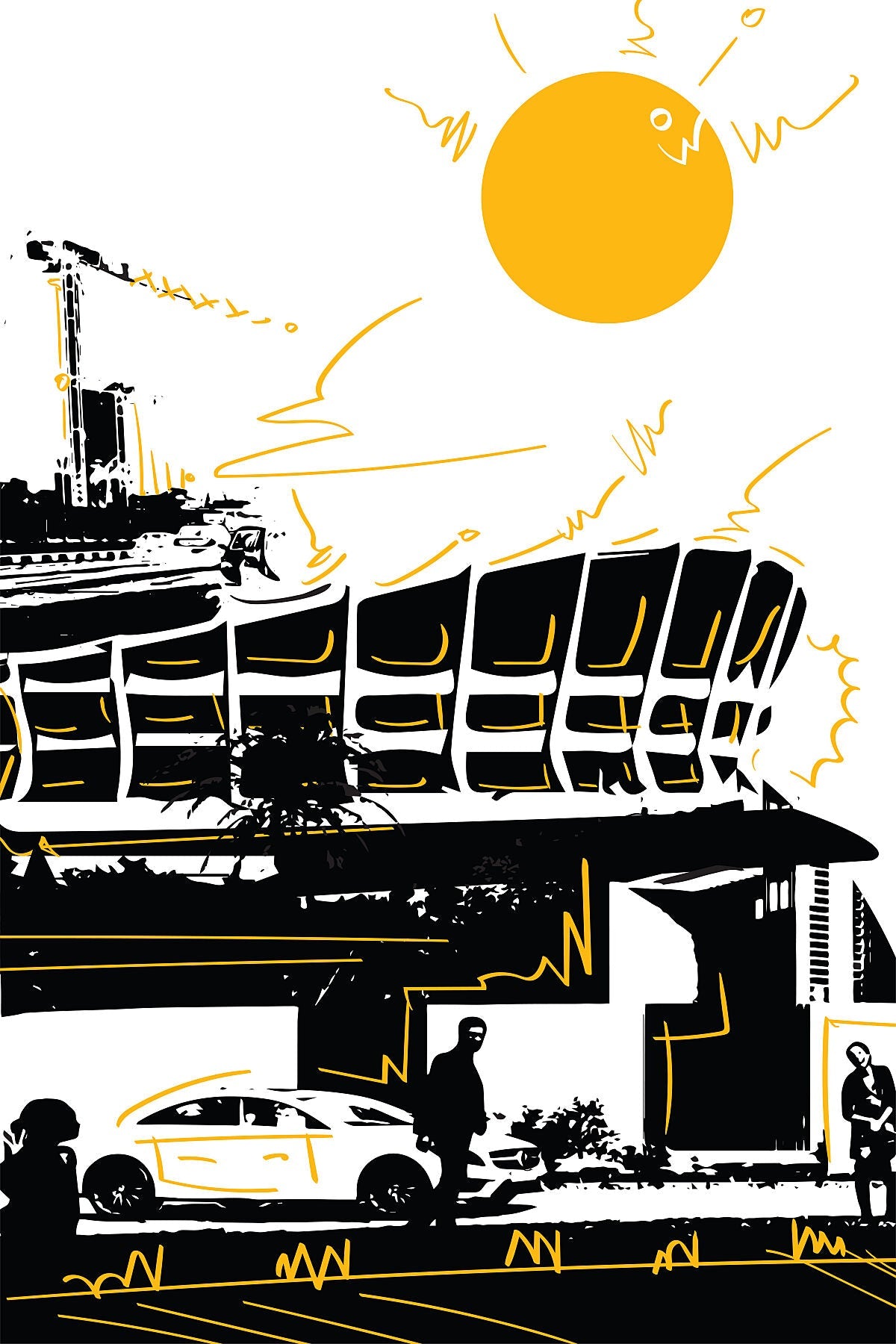
In his Tafawa Balewa Square artwork, Raknida's founder, Anthony Ezeokoye, puts those horses at the centre. It belongs to Made in Lagos, his series on the city's landmarks, from the National Theatre to the Ikoyi Link Bridge. The series treats the city as living heritage, not postcard nostalgia.
Nigeria is home to more than 250 ethnic groups and hundreds of languages. Its art has never been one thing. Igbo, Yoruba, Hausa, Edo and many other traditions run through the work on Raknida, each named on its own terms.
Chibuike Clement Obioha's Unity takes that on directly, bringing figures from different peoples into one frame.
For a long time, the images of Nigeria seen abroad were made mostly by outsiders. Today's Nigerian artists, at home and abroad, are making their own record. They draw the streets they walk, the musicians they grew up with, and the faces of people they know.
Obioha's portrait of Fela Kuti honours a musician who sang about freedom and self-determination.
For a Nigerian creative, independence is unfinished work. It is the freedom to define yourself, and the responsibility to get the story right. That is why every work on Raknida names its artist and any tradition it draws on.
Curator's Note
Before it was a square it was a racecourse, and the horses never left. Anth Ezeokoye puts the rearing horse statues at the centre of the gr…
Curator's Note
The building every Lagosian can draw from memory, its roof shaped like a general's cap, with a working crane standing beside it. Anth Ezeok…
Curator's Note
Where ethnic sentiment is used to divide, Clement Obioha paints Nigeria's three largest peoples as one band: three instruments, three voice…
Curator's Note
A homage in the caricaturist's language: Fela at the keys, eyes shut, smoke curling, a spotlight from one side and fire rising on the other…
Every Raknida work comes with its Cultural Passport — the artist, the tradition, and how it was made, documented.